WaterBotics in Action: How an Underwater Robotics Program Reshapes Student Confidence
How WaterBotics builds student confidence, peer mentoring and STEM engagement through implementation stories from classrooms, camps and out-of-school programs.
Most STEM programs are evaluated on what students learn. WaterBotics is more interesting because of what it changes in how students see themselves.
Confidence
Mentoring
Inclusion
Settings
Success
The Confidence Shift Educators Keep Reporting
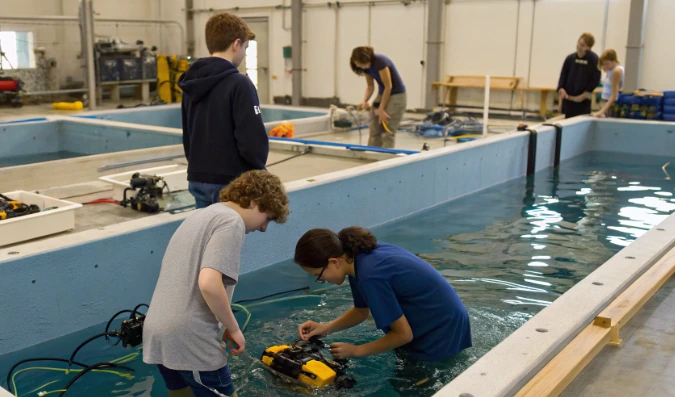
Students who may be quiet in a traditional classroom often become active participants when they have a physical robot to test. The challenge gives them a role, a reason to speak and a visible way to improve their work.
A failed water test can be less discouraging than a wrong answer on paper because the robot shows what happened. Students can point to the problem, discuss it and try again.
What Changes
Why Peer-to-Peer Learning Emerges Without Being Forced
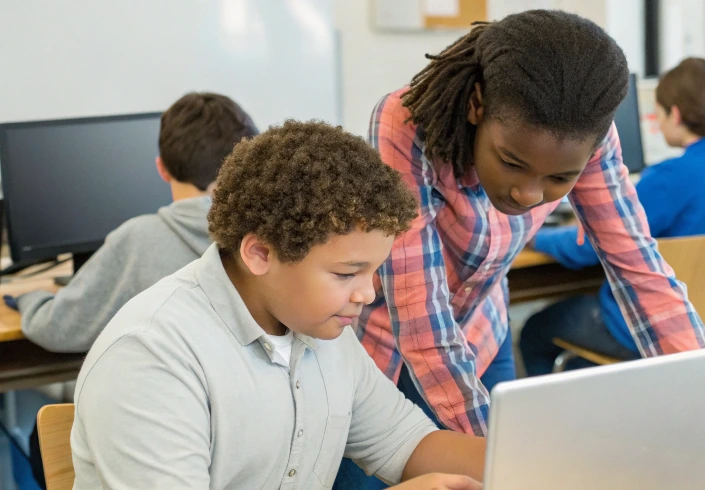
One of the strongest patterns in WaterBotics stories is peer teaching. Students who understand a build step, programming issue or test result naturally begin explaining it to others because the problem is concrete and visible.
This kind of mentoring feels different from formal instruction. It often happens because a team needs the robot to work, not because someone assigned a teaching role.
The Gender Recruitment Problem and What Is Actually Causing It
Despite the curriculum’s strong record with girls, recruitment can still be difficult when families or students do not see themselves in STEM spaces. WaterBotics works best when programs think carefully about invitation, framing and student support.
Single-gender formats
Some students participate more freely when social pressure is reduced.
Shared parent communication
Families need clear explanations of what the program actually teaches.
Recruitment through trusted networks
Schools and community partners can make programs feel accessible.
Implementation Across Different Settings
Classroom Integration
In schools, WaterBotics works best when teachers connect the activity to physics, programming and design documentation rather than treating it as a standalone project.
Out-of-School Settings
In camps and after-school programs, the format can invite students who may not already identify as STEM learners to try engineering in a lower-pressure environment.
What Determines Whether a Deployment Actually Succeeds
The program’s outcomes vary widely across deployments, and the variation is not random. Successful implementation consistently shares several characteristics: prepared instructors, enough material support, realistic time and a culture that treats failure as part of learning.

Transformation Takes Time
Students often show the strongest changes after repeated exposure, when they have enough time to move from uncertainty into ownership of the engineering process.
How to Translate This into Decisions
For educators and coordinators evaluating WaterBotics, the question is whether the curriculum serves a clear purpose: confidence, inclusion, teamwork, engineering practice or a combination of those goals.