WaterBotics: How an Underwater Robotics Curriculum Reshapes STEM Learning
Many descriptions of practical STEM education focus on the final outcome students reach: a working robot, a finished experiment or a completed challenge. WaterBotics is important because it shows what happens before that outcome, when students are still planning, testing, revising and learning from mistakes.
This overview explains how an underwater robotics curriculum can turn abstract STEM concepts into a visible, physical learning process.
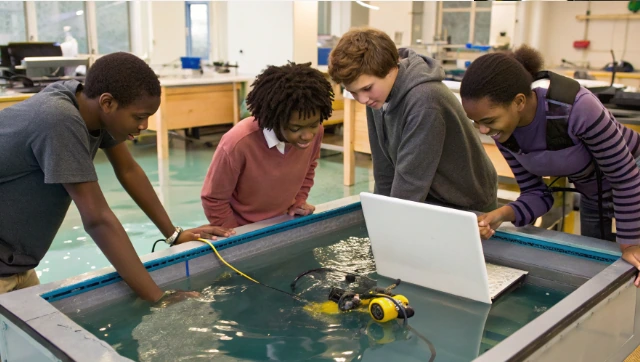
Design
Buoyancy
Testing
Teamwork
Iteration
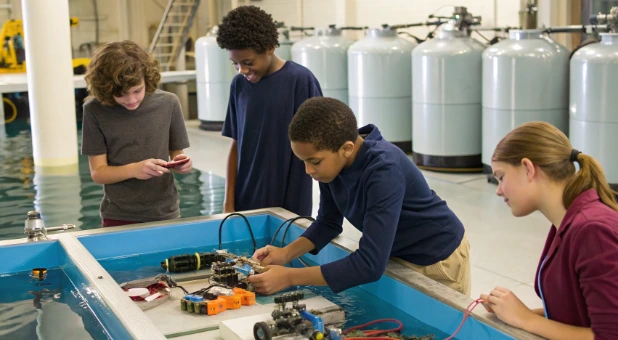
What WaterBotics Actually Teaches
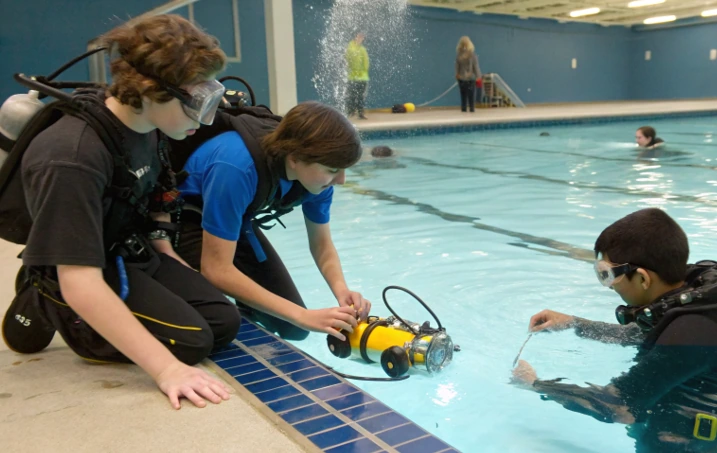
The curriculum sits at the intersection of engineering design, programming and the everyday reality of water as a test environment. Students are not simply told that buoyancy, balance and propulsion matter. They discover those ideas when a robot tilts, sinks, drifts, turns too slowly or fails to complete a task.
That makes the learning practical. Mechanical choices, code decisions and team communication all become part of one connected system that students can observe, discuss and improve.
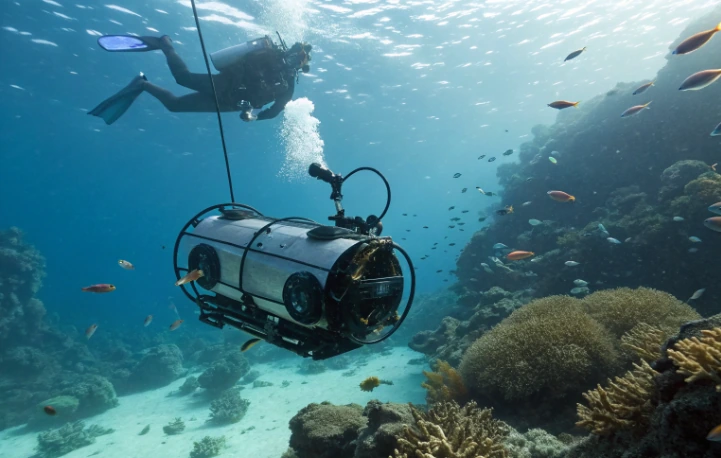
Why Underwater Robots Specifically
Underwater operation is harder to diagnose than land or air robotics in ways that turn out to be pedagogically useful. A robot may be visually hidden, may move unpredictably and may react to small physical changes that students did not expect.
That difficulty makes the project more realistic. Students need to observe carefully, make evidence-based adjustments and understand that engineering progress often comes from repeated testing rather than a single correct answer.
Who the Program Has Reached
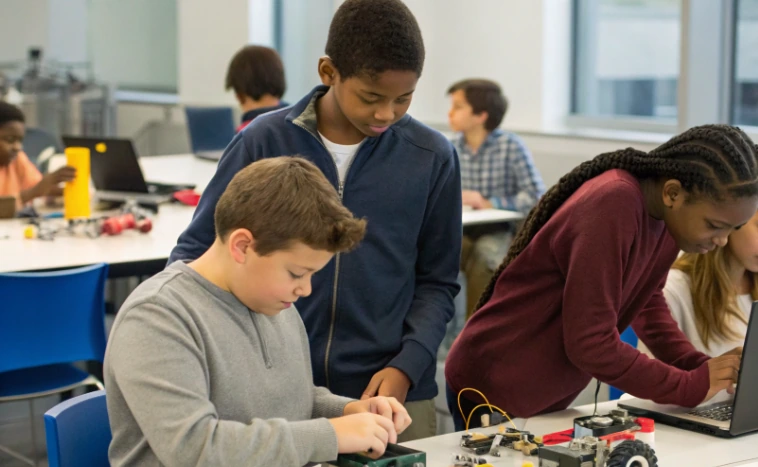
WaterBotics has been delivered through schools, after-school programs, summer activities and teacher training. Its broader value is not only the number of students reached, but the way it gives participants a concrete reason to practice engineering habits.
The 21st-Century Skills Layer
WaterBotics is especially useful because it makes soft skills practical rather than abstract. The curriculum creates situations where students must divide work, manage time, explain choices and respond to unexpected results.
Testing
Students plan test runs and compare results with design expectations.
Communication
Teams must explain design choices and listen to competing ideas.
Iteration
Failed trials become information for the next version of the robot.
Evidence
Students learn to support decisions with observations, not guesses.
What Distinguishes WaterBotics From Other Robotics Programs
The robotics curriculum space has expanded substantially over the past decade. WaterBotics occupies a specific niche because it uses underwater constraints to make design tradeoffs immediate and visible.
It is not only about building a robot. It is about giving students a system where physics, programming, collaboration and troubleshooting all show up in the same challenge.
Practical Implementation
Successful implementation depends on space, materials, facilitation and time for redesign. The program works best when students are allowed to test, fail, discuss and refine rather than rush toward a polished final robot.
How to Move Forward
WaterBotics has the potential to support schools, after-school programs and informal STEM learning spaces that want engineering to feel concrete, collaborative and connected to real constraints.